In modern construction, strong foundations are the backbone of safe and durable structures. Among various foundation systems, the bored pile wall has become a popular choice for deep excavations, retaining walls, and high-load structures. Combined with advanced techniques for breaking down piles, these solutions ensure precision, safety, and efficiency at every stage of construction. Whether for commercial buildings, infrastructure projects, or urban developments, the combination of solid piling and clean pile breaking forms the cornerstone of stable and long-lasting engineering works.
A bored pile wall, also known as a drilled shaft wall, is constructed by drilling deep cylindrical holes into the ground and filling them with reinforced concrete. Unlike driven piles, which are hammered into place, bored piles are formed in situ, reducing vibration and noise—an advantage for projects in densely populated urban areas. These walls are used to support excavations, stabilize slopes, and resist lateral earth pressures. They are especially effective in variable soil conditions where precision drilling and reinforcement are required. Engineers often design bored pile walls with overlapping or contiguous piles, creating a strong, continuous barrier that prevents soil movement and water infiltration.
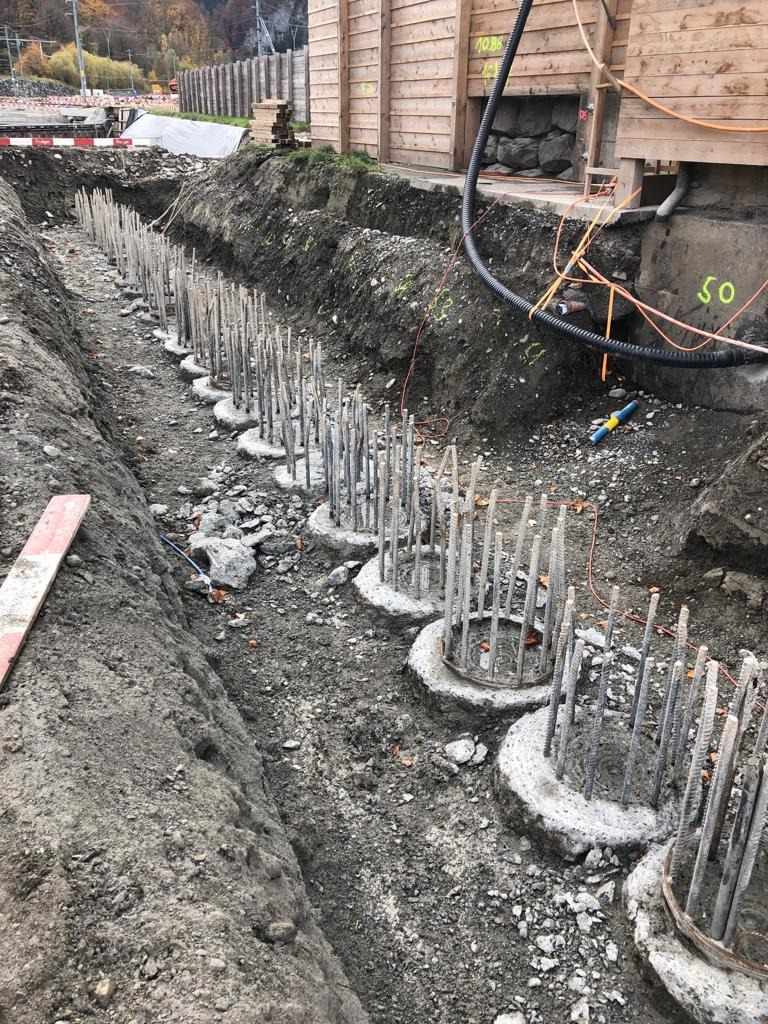
The construction of a bored pile wall involves several precise stages: drilling to the desired depth, installing a steel reinforcement cage, and pouring high-quality concrete into the borehole. Depending on the project requirements, bored pile walls may be temporary or permanent. In addition to their structural integrity, these walls offer design flexibility—allowing for curved alignments, varying pile diameters, and integration with other structural elements. This makes them ideal for infrastructure works such as tunnels, basements, bridges, and retaining systems in challenging terrains.
After the piling process, one of the most critical tasks is breaking down piles to the correct cutoff level. This process involves removing the excess concrete at the pile head to expose the reinforcement bars for the next stage of construction. Traditionally, workers used handheld jackhammers or hydraulic breakers, which were time-consuming and potentially damaging to the reinforcement. Today, advanced pile breaking machines and hydraulic pile cutters have revolutionized this stage. These tools allow for precise, uniform, and controlled removal of concrete without harming the steel cage or the surrounding structure.
Modern pile breaking techniques emphasize efficiency, safety, and environmental responsibility. Hydraulic pile breakers use synchronized pressure around the pile head, ensuring clean cuts and minimal vibration. This method significantly reduces manual labor, dust, and noise compared to older methods. Automated pile breaking systems also enhance worker safety, as operators can control the equipment remotely. By ensuring consistency in pile cutting, contractors can maintain high construction quality, meet design tolerances, and accelerate project timelines—all while minimizing material waste and rework.
In conclusion, both bored pile walls and modern pile breaking methods represent major advancements in civil and structural engineering. While bored pile walls provide robust and adaptable support for deep foundations, efficient pile breaking techniques ensure that the finishing phase is precise and safe. Together, they contribute to building stable, sustainable, and well-engineered structures that stand the test of time. As the construction industry continues to evolve, these technologies will remain at the heart of foundation innovation, ensuring every project begins with strength and ends with precision.


Write a comment ...